
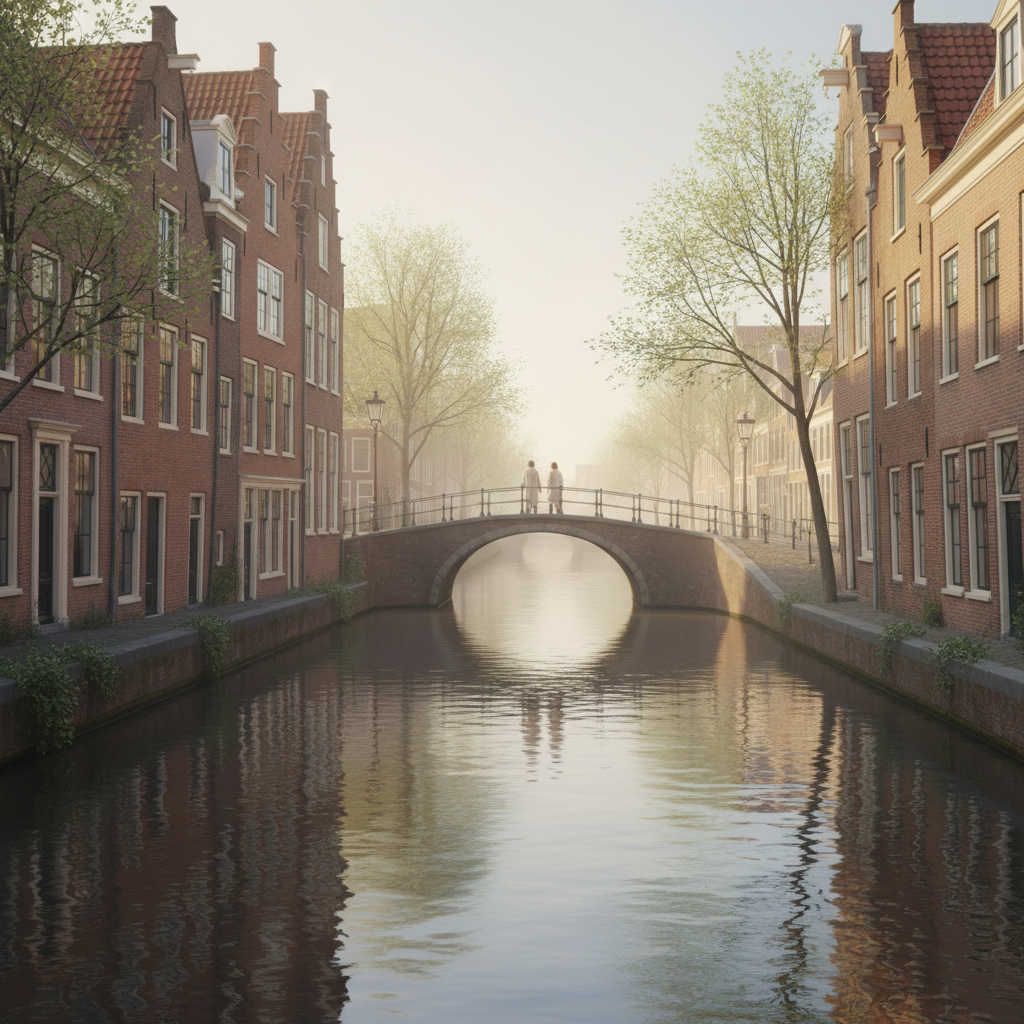
The week Emma landed in Maastricht, my phone got a workout — new apartment photos, the first tram-pass selfie, a stroopwafel review, the Maas at golden hour. So fun.
Here's the small infrastructure we set up before she flew, the stuff that turned the first week from logistics into texts. The bank, the eSIM, the wire, the flight alert — quiet background tools so the foreground can just be the new chapter. (A heads-up: this post mentions a few brands we used and partner with. We may earn a small commission, at no cost to you.)
Day one — data on the phone.
The single best thing we set up before she flew. Airalo sells regional eSIMs you install before the flight — the second she lands at Schiphol, she has data, pulls up a map, calls a Bolt, texts us she made it. No U.S. roaming, no kiosk hunt. We bought a 30-day Europe plan to bridge her until she opened a Dutch SIM contract. Costs a few dollars. Set this up first. Truly.
Day three — the bank.
Opening a Dutch bank account used to be a multi-week ordeal — in-person appointment, residence-permit card she didn't have yet, three forms of address verification. bunq changed all that. Netherlands-licensed digital bank, opens on a phone in twenty minutes, and the iDEAL integration lets her pay her landlord, tap her card at Albert Heijn, and bike the cobblestones like a local. Game-changer. The day her bunq card arrived, she sent me a photo with the caption "I exist here now." Yes you do, kid.
Day five — the wire.
Once the Dutch account exists, you can wire to it. Wise is the cleanest way to send dollars from a U.S. bank and land them as euros in a Dutch IBAN — real exchange rate, small visible fee, clears in hours. We do it the first of every month with a coffee. Done in a minute. Compared to my U.S. bank's $45-per-wire-plus-hidden-margin pricing, the year-over-year math is silly. Switch.
Day seven — the transit card.
Not an affiliate, just a heads-up — Emma's most-used piece of plastic after the bunq card. The Dutch transit system runs on a tap-on/tap-off card called the OV-chipkaart: the local Maastricht buses, the train up to Amsterdam, the bus from Schiphol. She picked up the anonymous card for €7.50 and tops it up via the OVpay app. Bonus — with OVpay, she can also just tap her bunq card directly for most rides, which she now does about half the time. Either route works. Easiest small thing that makes her feel like a local.
The texts she sends.
By the end of the week, the texts had a rhythm. A photo of the Maas at golden hour. A question about whether IKEA delivers (it does). A stroopwafel from Albert Heijn with the caption "I get it now." A voice memo about the kid down the hall from Brazil who's also figuring it out. The view from the Markt at lunch. A bike-commute photo that made me laugh out loud.
The Blossom+Blue piece, by the way, is already earning its keep — she's lived out of it for the first ten days while she set up her room, and she's already booked a long weekend to Berlin with friends. Easy, light, looks like nothing else on the train. She loves it.
The flight I'm already booking.
I upgraded to Going.com Elite the week she left — the Elite plan covers premium-cabin deals and mistake fares you'd never find scrolling Google Flights at midnight. Twice this year I'd like to fly business to see her, and the right alert in my inbox makes that doable. First visit booked. Second on the watch list. Marking the year by the visits ahead, which is honestly the best way to mark it.
What made the first weeks easy.
Set up the eSIM, the Wise transfer, and the Going alert before she lands. Once those are running, the foreground is just the texts — the new café she found, the bike route to class, the photo of her bedroom finally looking like hers.
The first week ends. The year begins. Maastricht is hers now. Look at her go.
Find Emma's collections at noemsodesigns.com — bags, pouches, and Emma's hand-drawn prints, designed for exactly this kind of year. Use FIRST10 for 10% off your first order.


